

The New Era of CDN: Beyond Simple Caching
The Content Delivery Network (CDN) has long been a backbone technology for speeding up web experiences and improving global reliability. Traditionally, CDNs have focused on caching static content—images, JavaScript, CSS, and video—at edge locations near end-users to reduce latency and offload origin servers. However, as digital businesses demand more sophisticated application delivery, the CDN has been rapidly evolving. Today’s cutting-edge CDNs integrate edge computing, AI-driven content optimization, and multi-CDN orchestration, offering not just better performance, but also significant efficiency and cost savings.
Edge Computing: Bringing Compute Closer to the User
Legacy CDNs solved the “distance problem” by keeping copies of content geographically close to users. Modern requirements—APIs, personalization, real-time data, IoT, and interactive applications—demand processing power at the edge itself. Enter edge computing integration within CDN platforms.
Edge computing empowers developers to deploy custom logic directly on CDN edge nodes. This could include dynamic data transformation, authentication, A/B testing, bot mitigation, API acceleration, and much more. Major CDN providers such as Cloudflare Workers, Akamai EdgeWorkers, and Fastly Compute@Edge now offer container-based or serverless runtimes at hundreds of global locations.
- Latency Improvements: Running code at the edge slashes round-trip times. For example, a personalized API response can be generated in 30–50ms globally—compared to 200ms+ if routed back to a distant origin server.
- Scalability: By processing traffic at the edge, origin servers are shielded from load spikes, resulting in up to 70% reduction in backend requests (Akamai, 2023).
- Security: Logic at the edge enables real-time security enforcement, rate limiting, and lightweight DDoS mitigation without incurring extra routing delays.
According to IDC, over 40% of enterprise internet traffic will be processed at the edge by 2025—with integrated CDN-edge architectures as a primary delivery vehicle.
AI-Powered Content Optimization: Smarter & Faster Delivery
Not all users, devices, or connections are equal. Delivering a 4K video or a high-res image to a mobile user on a 3G network is wasteful and detrimental to experience. Advanced CDNs now integrate AI and machine learning for content adaptation in real time, dramatically improving both speed and efficiency.
- Predictive Caching: Machine learning models analyze traffic patterns, prefetching and caching resources likely to be requested next. Fastly reports up to 99% cache hit ratios and a 50% reduction in peak origin load during traffic surges.
- Real-Time Image & Video Optimization: AI algorithms transcode media on the fly, adjusting resolution, quality, and format based on the requesting device and network conditions. Cloudflare's Polish and Stream or Akamai Image Manager can produce 30–70% bandwidth savings per asset while maintaining optimal user experience.
- Personalized Content Assembly: ML models at the edge can choose ideal content variants for each user, incorporating geo-location, device information, and historical behavior for high engagement and lower bounce rates.
By leveraging AI-driven optimization, organizations see not just faster web pages and streams (TTFB improvements from 400ms to sub-100ms in many cases), but also cost savings: bandwidth reduction, lower cloud egress bills, and improved conversion rates.
Multi-CDN Orchestration: Reliability and Performance at Scale
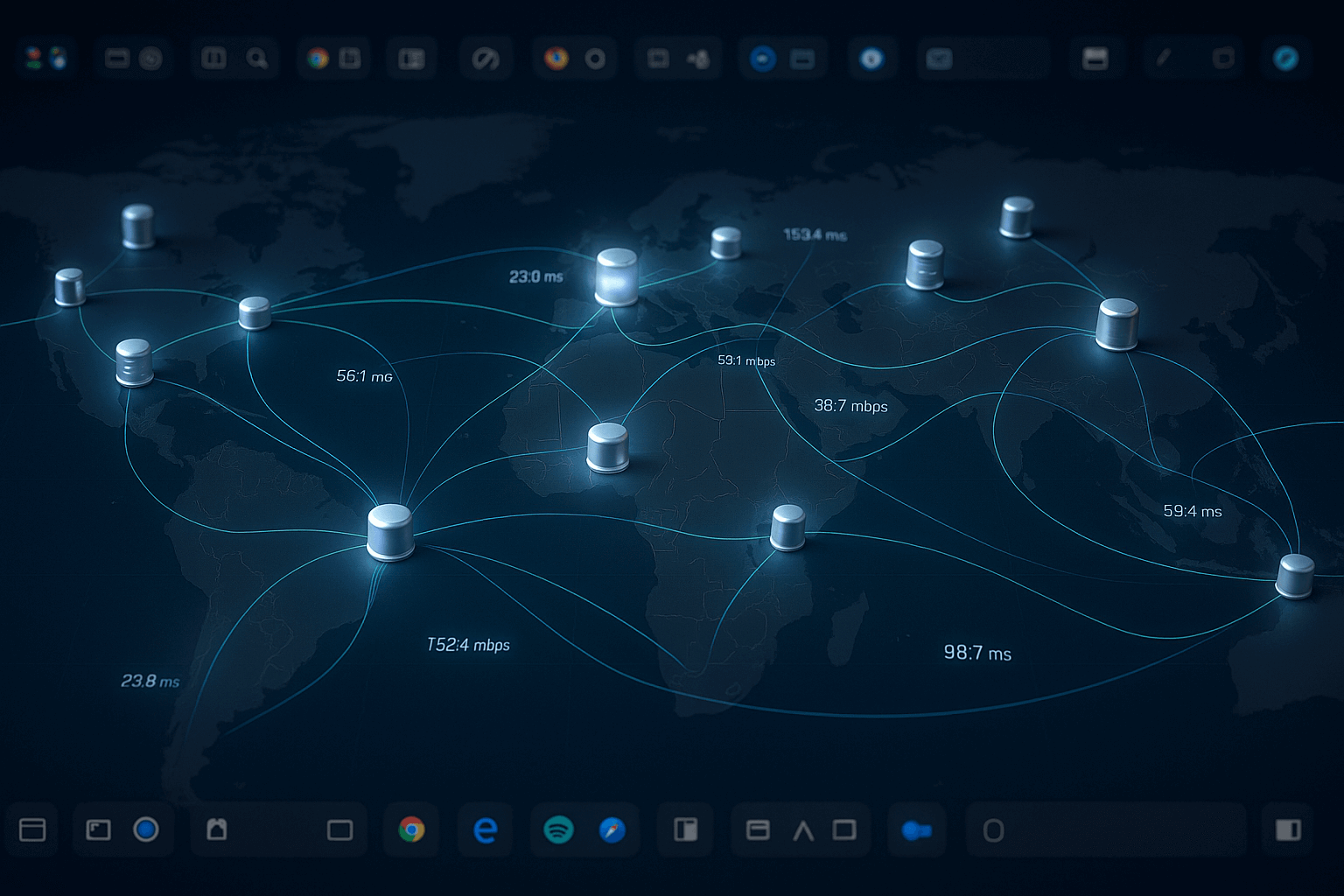
While a single CDN can optimize content delivery, multi-CDN strategies have become essential for global, high-traffic, or mission-critical applications. Different CDN providers have unique strengths—fiber connectivity, data center locations, throughput, and protocols—that vary by region and use case.
Orchestrating multiple CDNs—using intelligent load balancing, real-time analytics, and automated failover—enables businesses to ensure:
- Maximum Availability: If one CDN experiences an outage or regional slowdown, traffic is instantly rerouted—enabling 99.999% SLA-level uptime (Akamai/Mozart CDN Council, 2023).
- Performance Optimization: Real-time routing leverages the fastest CDN in each geography or network condition. Studies from Citrix ITM and Nielsen Norman Group show multi-CDN architectures yielding 10–30% lower latency globally vs. a single vendor.
- Cost Management: By dynamically shifting traffic to the most cost-effective CDN (taking into account data transfer pricing, contractual minimums, and peering agreements), enterprises often reduce CDN spend by 15–25% without compromising user experience.
Practical orchestration often employs DNS-based traffic steering, real user monitoring (RUM) feedback loops, and on-the-fly configuration via API. Third-party platforms like NS1, Cedexis, or Conviva provide granular control, actionable insights, and automated failover.
Practical Implementation Strategies
Adopting a next-generation CDN architecture involves a strategic blend of technology and operational discipline:
- Assess User Needs and Application Profiles: Identify where latency, bandwidth, or reliability issues impact your KPIs. Analyze global user geography, traffic spikes, personalization needs, and media usage patterns.
- Select CDN Providers with Edge Compute and AI: Evaluate support for serverless runtimes, WAFs, and real-time media adaptation. Opt for platforms with robust developer ecosystems, such as programmatic APIs and integration with CI/CD.
- Design Multi-CDN Flows: Choose DNS or HTTP-level load balancing based on your environment. Leverage real-time performance data for dynamic routing and automatic failover.
- Automate and Monitor: Integrate with observability tools (Datadog, Prometheus, Grafana) and employ RUM/Synthetic monitoring for continuous optimization. Automate cache purging, configuration changes, and health checks via Infrastructure-as-Code.
- Optimize and Iterate: Regularly test and optimize edge logic, content adaptation, and CDN routing policies based on analytics—maximizing cache efficiency, reducing egress, and minimizing time to first byte (TTFB).
Key Metrics: Quantifying the Gains
Deploying advanced CDN strategies delivers real, measurable outcomes:
- Time to First Byte (TTFB): Drops from 300–500ms to under 100ms when leveraging edge compute and optimized multi-CDN delivery (Cloudflare, 2023 benchmarks).
- Cache Hit Ratio: Enhanced with AI, frequently exceeds 95–99%, offloading origins and lowering cloud costs.
- Bandwidth Cost Savings: Up to 70% reduction through on-the-fly transcoding and intelligent traffic steering.
- Uptime: Multi-CDN environments achieve 99.999% availability—essential for financial, e-commerce, and streaming platforms.
Conclusion: The Future-Proof CDN
CDN technology is no longer just a passive cache layer—it’s a programmable, AI-augmented, globally distributed application platform. By embracing edge computing, machine learning optimization, and multi-CDN orchestration, organizations can deliver faster, smarter, and more resilient digital experiences, while reining in operational costs.
As internet traffic continues to surge—global data volume is forecast to hit 180 zettabytes by 2025 (Statista)—and user expectations rise, the advanced CDN will be an essential pillar for every online business. Integrate these strategies today to lead in performance, cost-efficiency, and customer satisfaction.